

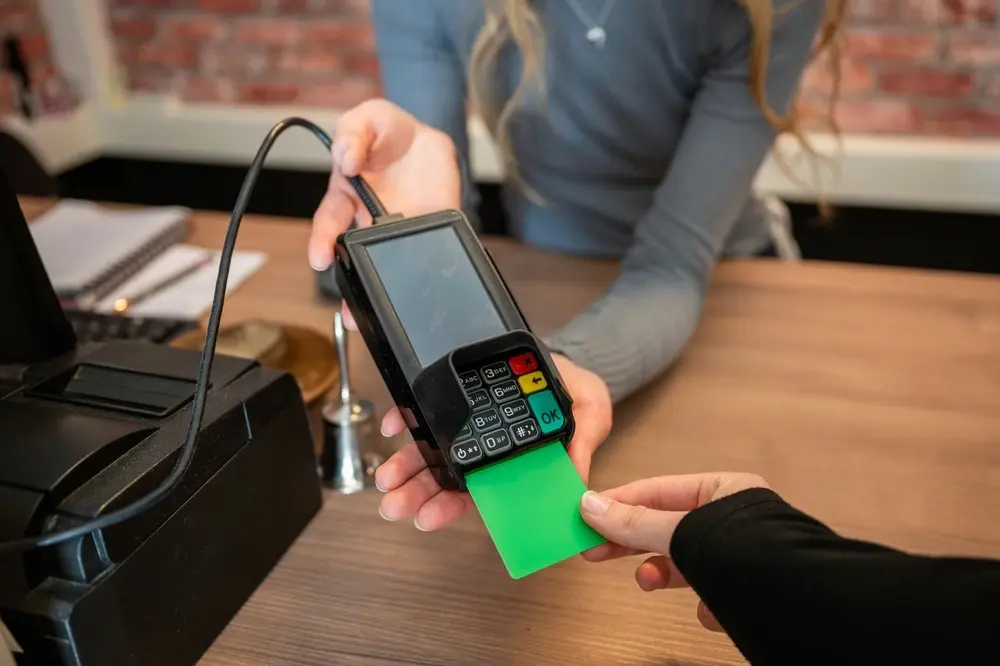

Operating a frame shop already comes with tight margins, fluctuating material costs, and seasonal sales cycles. But nothing cuts into profits faster than credit card processing fees — especially when your average ticket ranges from $100–$400, and your workflow involves multiple payments per project.
Thanks to high interchange rates (often 1.5–3.5% per transaction), statement fees, compliance costs, and equipment rentals, most frame shops lose hundreds of dollars per month without realizing it.
With the proper structure — and the right point of sale (POS) partner — you can reduce fees and keep more cash in your business.
Here’s how to take control of your processing costs and stop unnecessary charges from draining your revenue.
Why Credit Card Processing Fees Cost Frame Shops More
For frame shops, processing costs climb quickly because large-ticket orders and split payments multiply how much you lose to percentage-based fees.
That impact shows up in several ways.
Interchange Rates: The 1.5–3% That Adds Up
Interchange fees are nonnegotiable charges set by card networks. On a $400 shadow-box job, a 3% interchange rate results in $12 in processing fees. If you process five similarly-priced frames per month, that’s $60 lost to fees on those orders alone.
Monthly Statement Fees and Admin Charges
Many processors tack on routine administrative fees that have nothing to do with how much you actually sell. These charges often appear as small line items on your statement, making them easy to overlook.
You may have to:
- Pay $10–$30 in monthly maintenance charges.
- Absorb customer service fees buried inside your statements.
- Cover reporting and batch processing fees.
These fees provide no real value — they’re just padding your provider’s revenue.
Equipment Rental Costs
Traditional processors often lock businesses into monthly terminal rentals ranging from $20–$50. Over three years, that’s more than $1,800 for equipment worth a few hundred dollars.
PCI Compliance Fees
PCI compliance refers to the Payment Card Industry Data Security Standard (PCI DSS), which governs how businesses protect customer credit card data. If your processor doesn’t manage compliance, the burden — and the cost — often falls on your business.
Expect to:
- Complete questionnaires and incur fees — between $5 and $20 per month.
- Miss deadlines and pay $20–$250 per month in penalties for noncompliance.
Frame shops often incur these charges simply because their provider makes the process confusing.
Chargeback Penalties
Chargeback fees are nonnegotiable costs you pay when cardholders dispute a charge. Disputes — even when you win — often carry fees of $15–$100. With custom work that’s nonrefundable, these can stack up quickly.
In addition to interchange and obvious fees, many shops don’t notice:
- Early termination fees of $200–$500
- $5–$20 statement fees
- Online or text-to-pay gateway fees of $10–$30
Together, these costs inflate total credit card processing fees.
Why High-Value Frame Orders Make Fees Harder to Ignore
A frame shop isn’t a café or small retail store — your order values are higher, more customized, and split into payments.
Here’s how high-value frame orders can negatively impact your bottom line.
High Ticket Values Mean Higher Losses
At $100–$400 per ticket, percentage-based fees take a larger share with every swipe. That $12 fee on a $300 order doesn’t sound terrible until you multiply it by 200–300 transactions per month during peak wedding season.
Deposits Increase Overall Fees
Most custom framing requires a 50% upfront deposit, with the remaining balance due upon completion.
That means you must:
- Run two separate authorizations.
- Process two distinct transactions.
- Pay processing fees twice.
While the total percentage fee on a $400 project remains the same, split payments increase administrative overhead and expose your shop to additional per-transaction and gateway fees.
For large projects with multiple progress payments, total credit card processing fees can climb even higher.
Seasonality Should Work for You — Not Against You
During graduation, wedding, and holiday seasons, frame shops experience a spike in transaction volume. That increased volume gives you leverage.
You should:
- Show volume growth and negotiate lower rates with your merchant services provider.
- Present seasonal projections and request pricing concessions.
- Bundle processing with your POS system and secure discounted pricing.
If your processor hasn’t adjusted your rates in years, you’re likely overpaying.
How To Optimize and Reduce Credit Card Processing Fees
As a small frame shop owner, protecting your margins is critical. Here are strategies you can use to help reduce what you pay credit card processors each month.
Negotiate Interchange-Plus Pricing
Flat-rate processors may seem simple, but they often conceal markups. Interchange-plus is a transparent pricing model that lets you:
- Compare actual rates to reduce markup.
- Audit statements to catch and dispute changes.
- Scale volume to lower surcharges.
Many frame shops save between 0.3% and 0.7% per transaction by switching to interchange-plus pricing.
Eliminate Equipment Rental
Replace rented countertop terminals with modern software that handles payments and checkout in a single system.
Focus on solutions that let you:
- Combine POS and payment processing into one system.
- Phase out legacy hardware and other rented terminals.
- Support mobile or tablet-based checkout to reduce extra devices.
An all-in-one system lowers ongoing expenses and puts clear, up-to-date financial data at your fingertips.
Avoid Third-Party Markups
If your POS uses a third-party processor, fees are split among the POS software provider, the payment gateway, and the acquiring bank.
Centralized payment systems:
- Eliminate middleman markups.
- Remove gateway fees.
- Prevent compatibility charges.
You stop paying extra simply to move money from point A to point B.
Consolidate Payment Methods
Managing several payment processors increases transaction costs through stacked fees, creates multiple deposits to reconcile, and adds unnecessary administrative burden.
To lower these costs, you can:
- Route all payments through one system to reduce batch fees.
- Use text-to-pay to avoid terminal surcharges and extra hardware.
- Centralize deposits to simplify reconciliation and reduce errors.
The payoff is fewer fees and faster, more accurate reconciliation, helping you keep cash flow on track.
How Integrated POS Software Helps You Save $200+ per Month
Frame-specific software is built for high-ticket, custom framing businesses — and it eliminates most of the credit card processing fees that these shops often struggle with.
What you can do with an all-in-one system:
-
Use integrated processing: Eliminate ongoing rental fees by replacing separate, outdated terminals.
-
Access interchange-plus pricing: See actual card costs instead of absorbing hidden processor markup.
-
Send text-to-pay invoices: Collect payments faster and reduce missed or delayed transactions.
-
Consolidate reporting: Track sales, deposits, and balances together without needing to cross-check multiple platforms.
-
Stay compliant automatically: Meet PCI requirements without added fees or manual oversight.
With smarter processing, most shops easily recover $200–$400 per month, especially during peak season.
Reduce Your Credit Card Processing Fees and Keep More Profit
If you want stronger margins, healthier cash flow, and simpler daily operations, reducing credit card processing fees is one of the quickest ways to achieve them.
Frame shops with high-ticket sales and split payments lose thousands annually to avoidable fees — but with LifeSaver’s integrated, transparent processing, you can take control.
Explore plans and pricing today to start seeing lower fees, fewer surprises, and faster payments.